How Congestion Klaverjassen came to be
A game that started with a simple challenge, getting a grid operator to talk to developers, that turned into a workshop, a card deck, and a way to make grid congestion feel real.
The spark
The idea was inspired by Dirk Wolffenbuttel at Stedin, who made a sharp point that stuck with me: grid operators rarely go out and talk to the market, eventhough their work depends on what the market does. I wanted to create a workshop to change that at our upcoming event, Solarplaza Summit Energy Storage The Netherlands 2026.
The workshop
The first idea was a developer-DSO workshop: DSOs reveal fictional congestion “hotspots,” and developers respond with on-the-spot strategies for flexibility, storage deployment, and coordination. Eril van Boekel from Balanz was recommended by Jakoba van der Mei from Startgreen Capital as someone who could help shape and lead it it.
About a week before the conference, I got into a brainstorm with Erik to figure out what this thing actually was. Out of that brainstorm, the concept of Congestion Klaverjassen emerged: a card game mirroring actual decisions a developer has to make, with real time feedback and consequences. Tech, contracts, ACM, finance, every hand is a project.
From concept to playable deck took a few fast iterations, a lot of red ink on print-outs, and several rounds of "wait, what happens if you combine these two cards?" Eventually it came together.
Playing on the day
Playing on the day was super fun. Lots of really cool projects came out of the tables, and the best part was that players got real, in-person feedback from the people who'd actually decide their fate in the real world.
Timothy Alders (Stedin) was at the table answering grid-access questions. Timon Dubbeling (ACM) was running around adjudicating the Red Card. Jakoba van der Mei (Startgreen Capital) gave instant feedback on whether a project would actually get financed, and at what cost with the Jakoba Capital Card. Sander Kooper (Vrijopnaam) brought the developer's perspective, Barbera de Mol (Edmij) advised on flexibility. The entire operation was facilitated by Erik van Boekel (Balanz), he connected all the dots, and declared the winner.
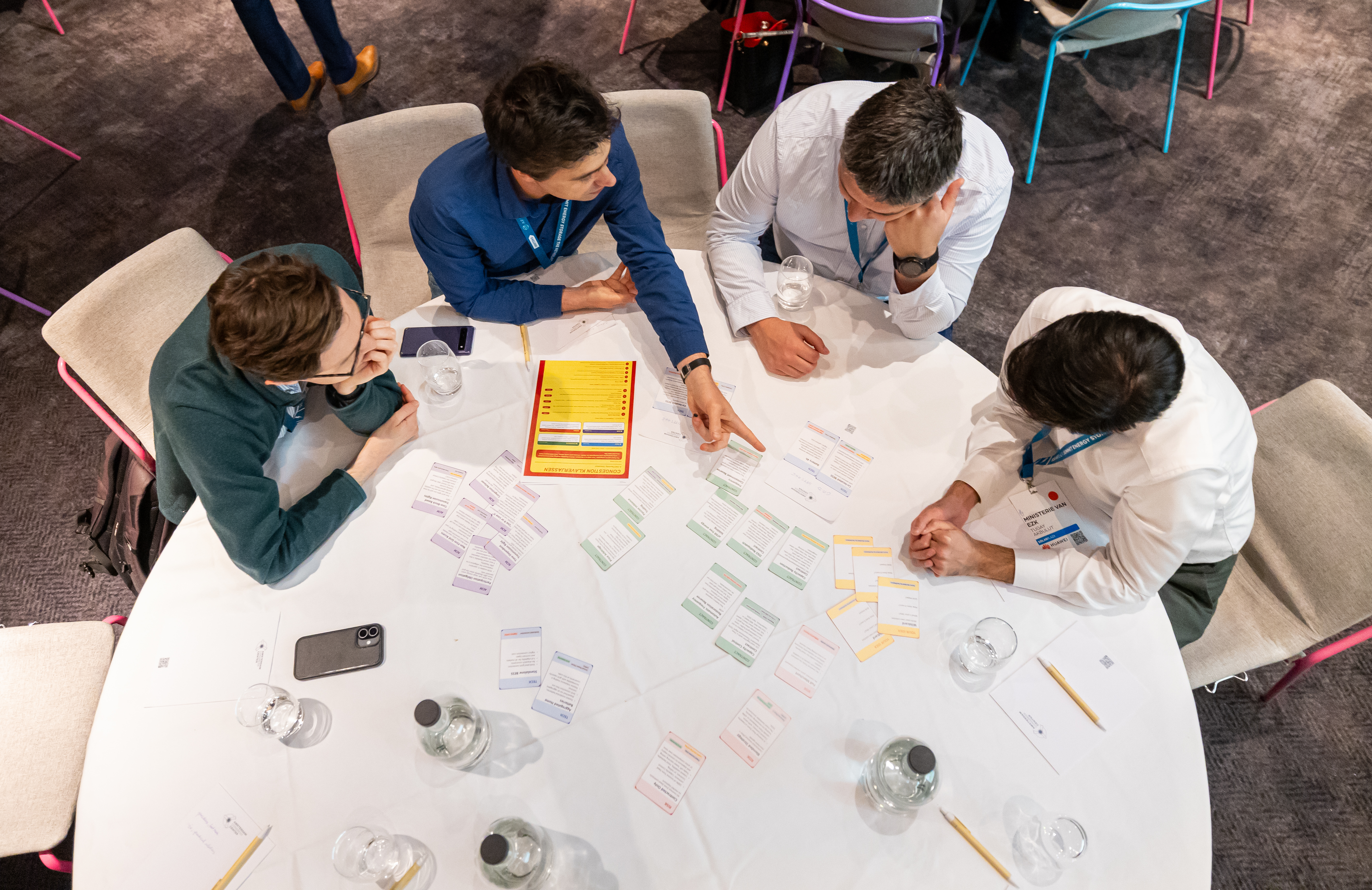
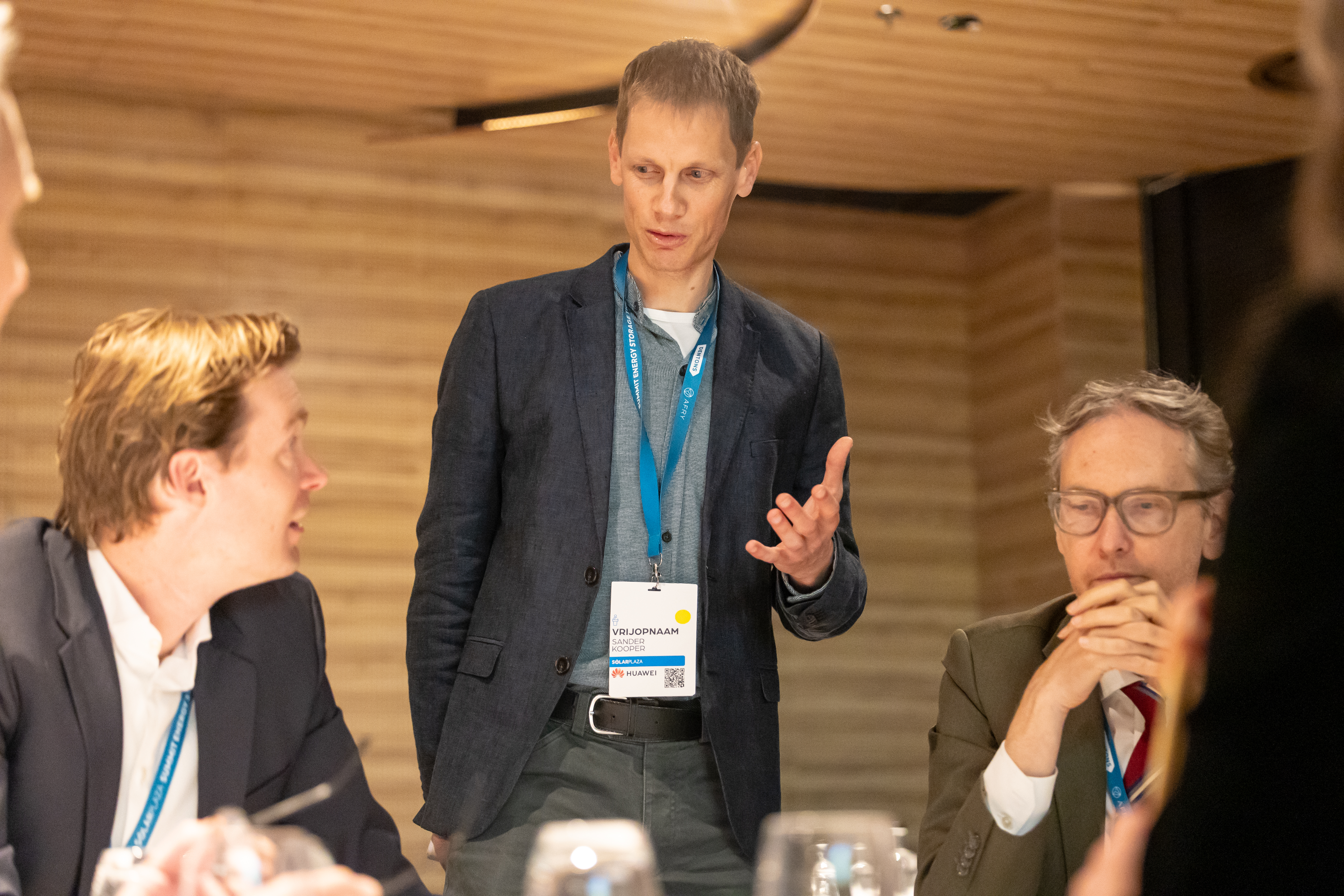
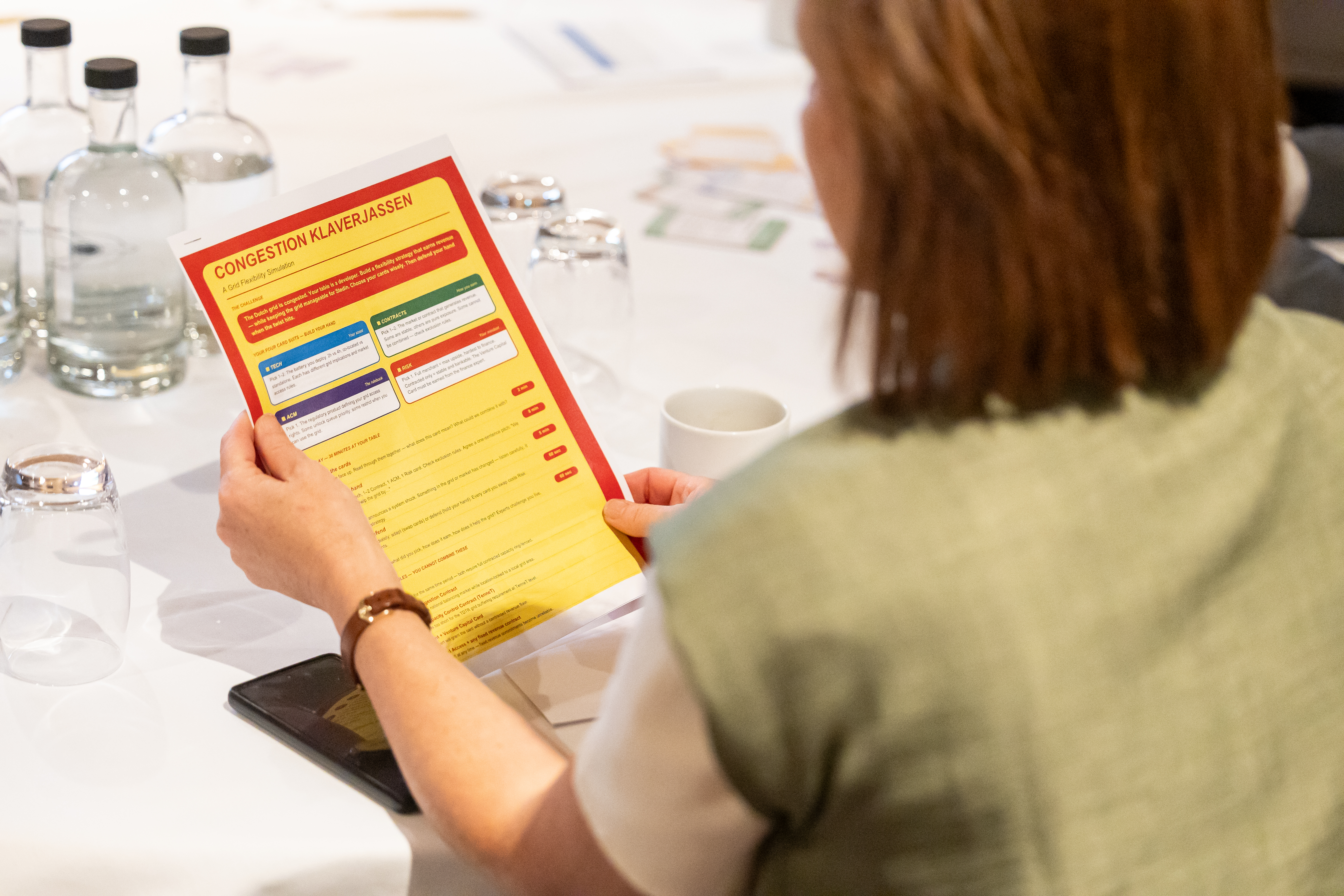
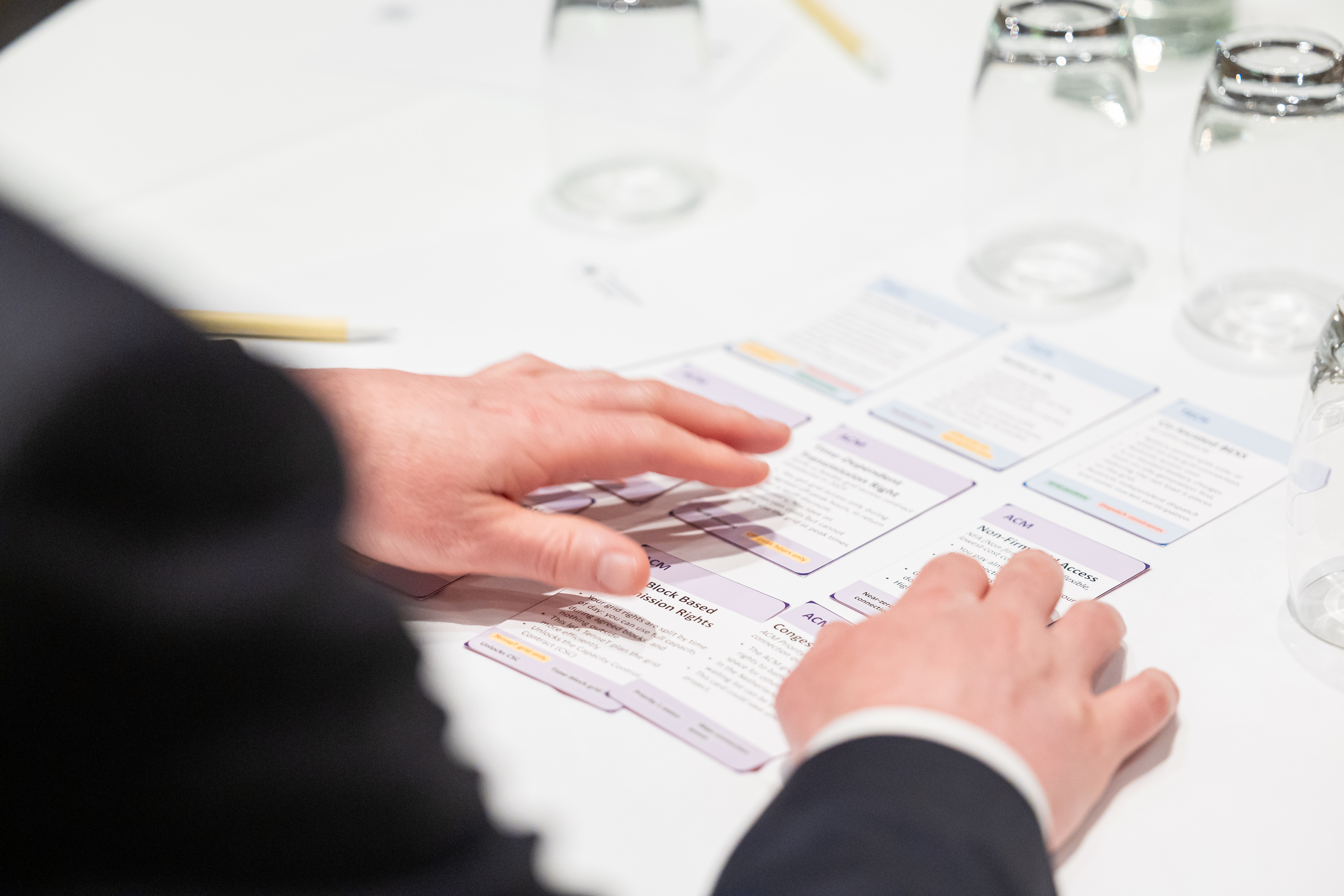
Photos from the Solarplaza Summit Energy Storage 2026.
Thank yous
This game exists because of the people who showed up, gave feedback, printed cards, and helped us figure out what worked. In rough order of contribution:
- Dirk Wolffenbuttel (Stedin) For the original push, go talk to developers, that started the whole thing.
- Erik van Boekel (Balanz) Co-conspirator on the brainstorm. Helped turn a vague idea into an actual game with rules.
- Tom van der Linden (Solarplaza) Initial feedback and continous proof of concept
- Victor Georgescu (Solarplaza) Created physical card deck
- Edwin Koot (Solarplaza) Inventor of the Wild Card mechanic. Bought to light the ideas of the people in the room
- The first-session facilitators Spent time with me creating and running v1.0
- Everyone who played at the Summit For the questions, the arguments, and the suggestions written on the back of the rules sheet.
The first-session facilitators
These three spent their own time running the very first table at the Summit and brought back the feedback that shaped v1.0. If you'd like them to run a workshop for your team, conference, or industry group: reach out directly.


Want to run Congestion Klaverjassen at your event? Get in touch with any facilitator above, or reach out via the feedback form.
About the creator

Created by Dee. I like to solve problems by creating fun things that don't exist.
Currently working in the energy transition and always looking to collaborate. The dream is to build a version of this game for every country in Europe, each tuned to its own grid quirks, market mechanics, and regulator.
If you're interested in bringing Congestion Klaverjassen to your country or organisation, get in touch.
If you played, ran a session, or have an idea for a card, I'd genuinely love to hear it. The game is at v1.0 and it's still very much a living thing.
Share feedback →